

Ngục khám vua Tần Bà Sa La (Bimbīsara)
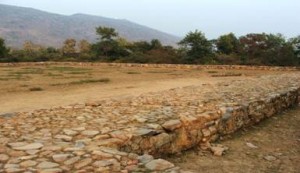
Trên quãng đường đi đến Linh Thứu sơn khoảng 2 km từ tinh xá Trúc Lâm có một bờ tường đá dày 2m, nằm bên trái cách con đường chính chừng 30 m, hình chữ nhật, dài khoảng 100m, rộng độ 70m, đó là nhà tù giam vua Tần Bà Sa La thuở xưa. Từ vị trí này, chúng ta nhìn thấy xa xa thấp thoáng tháp Hòa Bình trên đỉnh Sonagiri và chóp núi Linh Thứu, cách chừng 5 km bằng đường chim bay, khoảng 7 km đi đường lộ nhựa.
Tìm kiếm nhanh
ID:108 Ngục khám vua Tần Bà Sa La (Bimbīsara)
ID:108
Class:4
Section:A
General Information
Tên gọi |
: | Ngục khám vua Tần Bà Sa La (Bimbīsara) |
|---|---|---|
| Academic Year | : | 2020 |
| Gender | : | Không xác định |
| Religion | : | Group |
| blood | : | B+ |
Other Information
Trên quãng đường đi đến Linh Thứu sơn khoảng 2 km từ tinh xá Trúc Lâm có một bờ tường đá dày 2m, nằm bên trái cách con đường chính chừng 30 m, hình chữ nhật, dài khoảng 100m, rộng độ 70m, đó là nhà tù giam vua Tần Bà Sa La thuở xưa. Từ vị trí này, chúng ta nhìn thấy xa xa thấp thoáng tháp Hòa Bình trên đỉnh Sonagiri và chóp núi Linh Thứu, cách chừng 5 km bằng đường chim bay, khoảng 7 km đi đường lộ nhựa.
Ngục khám vua Tần Bà Sa La (Bimbīsara)
Ngục khám vua Tần Bà Sa La (Bimbīsara)
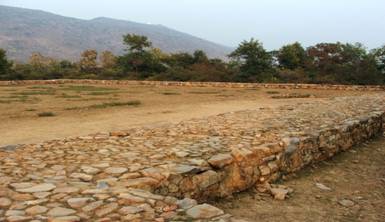 Nền nhà tù, nơi A Xà Thế nhốt vua cha Bình Sa Vương
Trên quãng đường đi đến Linh Thứu sơn khoảng 2 km từ tinh xá Trúc Lâm có một bờ tường đá dày 2m, nằm bên trái cách con đường chính chừng 30 m, hình chữ nhật, dài khoảng 100m, rộng độ 70m, đó là nhà tù giam vua Tần Bà Sa La thuở xưa. Từ vị trí này, chúng ta nhìn thấy xa xa thấp thoáng tháp Hòa Bình trên đỉnh Sonagiri và chóp núi Linh Thứu, cách chừng 5 km bằng đường chim bay, khoảng 7 km đi đường lộ nhựa.
Sử chép rằng: vì còn quá trẻ, tính tình bồng bột nông nổi nên bị sự xúi giục sai trái của Đề Bà Đạt Đa, người dốc lòng hại Phật, thái tử A Xà Thế (Ajatasattu) dùng mọi thủ đoạn để hãm hại vua cha, tức vua Tần Bà Sa La, bằng cách bắt giam vào đại lao và dùng nhiều cực hình bức tử Ngài. Những ngày cuối đời trong ngục thất, đức vua hướng về núi Linh Thứu cầu khẩn đức Thế Tôn chỉ dạy phương pháp tu tập để thoát khỏi cuộc đời đầy đau khổ này. Vì ham mê danh vọng, quyền thế hư ảo, vì chứa đầy tham sân si trong lòng mà con người gian trá lọc lừa, tìm cách hãm hại nhau để vun bồi cho dục vọng và ngã chấp, ngay cả như cha với con cũng không từ nan. Trần gian là bể thành sầu khổ. Sự có mặt của mọi con người trên cuộc đời chỉ nhằm giải quyết “ân oán giang hồ”, cứ thế mà trả vay, vay trả đến kiếp nào cho xong! Vì vậy, khi được đức Thế Tôn từ trên đỉnh Linh Thứu sơn phóng quang, xoa đầu và hiển hiện kim thân thuyết pháp, ông liền đắc quả A Na Hàm, rũ sạch mọi đau buồn và an nhiên đi vào cõi chết. Hoàng hậu Vi Đề Hi, vợ vua Tần Bà Sa La, cũng bị giam lỏng trong ngục thất này, nên bà cầu xin đức Phật chỉ dạy phương pháp tu thoát khỏi cõi ta bà ô trược. Cảm được lời cầu xin của Bà, đức Phật hiện thân thuyết pháp an ủi, giới thiệu thế giới Tây Phương Cực Lạc của Phật A Di Đà và phương pháp tu vãng sanh về cõi ấy. Điều này đã được ghi chép đầy đủ trong kinh Quán Vô Lượng Thọ, một trong những bài kinh căn bản của hành giả Tịnh Độ Tông.
.BIMBISĀRA'S JAIL
Địa điểm truyền thống được nhận dạng là nơi vua Bimbisāra bị giam tại Rājagaha
ĐÍNH CHÍNH QUAN TRỌNG
Record hiện tại:
Ngục khám vua Tần Bà Sa La (Bimbīsara)
cần đổi cách mô tả.
Không nên trình bày địa điểm này như:
một địa danh canonical đã được Nikāya xác định.
Cũng không nên trình bày:
khu phế tích hiện nay chắc chắn chính là nhà ngục của Bimbisāra.
Tên an toàn:
Bimbisāra's Jail – địa điểm truyền thống tại Rājagaha
hoặc tiếng Việt:
Di tích truyền thống “Ngục vua Bimbisāra” tại Rājagaha
Classification:
TRADITIONAL / PROPOSED ARCHAEOLOGICAL IDENTIFICATION
không phải:
CANONICAL MICRO-SITE.
1. VẤN ĐỀ LỚN NHẤT CỦA RECORD
Cần tách ba vấn đề:
A. Bimbisāra là nhân vật lịch sử–canonical gắn với Rājagaha
RẤT CAO.
B. Truyền thống Pāli về việc Ajātasattu giam và làm Bimbisāra chết
RẤT MẠNH, nhưng nhiều chi tiết nằm trong Aṭṭhakathā/Jātaka/truyền thống.
C. Khu phế tích hiện gọi “Bimbisāra's Jail” ở Rajgir chính là nơi xảy ra sự kiện
CHƯA CHỨNG MINH.
Không được lấy A + B để suy ra C là chắc chắn.
2. KHÔNG CÓ CANONICAL PĀLI PLACE-NAME “BIMBISĀRA JAIL”
Không có cơ sở để đặt:
canonical_name = Bimbisāra Jail
như:
-
Veḷuvana;
-
Gijjhakūṭa;
-
Jīvakambavana;
-
Isigili.
“Bimbisāra's Jail”:
là modern archaeological/traditional site label.
3. PĀLI
Person:
Bimbisāra
Sanskrit:
Bimbisāra
Vietnamese:
Tần-bà-sa-la / Tần Bà Sa La
Nhưng đây là:
tên người
không phải canonical geographical name của nhà ngục.
4. PLACE TYPE
Không ghi đơn giản:
place_type = prison
như archaeological certainty.
Nên:
place_type = archaeological enclosure / traditionally identified prison site
hoặc:
archaeological site traditionally identified as Bimbisāra's prison.
5. HIERARCHY
Broad hierarchy:
MAGADHA
↓
RĀJAGAHA
↓
“BIMBISĀRA'S JAIL” TRADITIONAL SITE
Nhưng child cuối phải có flag:
MODERN/TRADITIONAL IDENTIFICATION.
6. RĀJAGAHA
Rājagaha:
capital of Magadha.
Modern broad identification:
Rajgir, Bihar, India.
Confidence:
VERY HIGH.
7. BIMBISĀRA
Bimbisāra:
king of Magadha.
Capital:
Rājagaha.
One of the most important royal supporters of:
Buddha Gotama.
8. VEḶUVANA
Bimbisāra's most important geographical Buddhist association is:
Veḷuvana.
He offered:
Veḷuvana
for use by Buddha and Saṅgha.
Therefore:
Bimbisāra → Veḷuvana
has much stronger early Buddhist geographical evidence than:
Bimbisāra → present “Bimbisāra Jail” ruins.
9. DO NOT MERGE
Keep separate:
Rājagaha → Veḷuvana
Rājagaha → Gijjhakūṭa
Rājagaha → Jīvakambavana
Rājagaha → modern traditional “Bimbisāra's Jail”.
CANONICAL / NIKĀYA
10. DN2 SĀMAÑÑAPHALA SUTTA
DN2 is extremely important for:
Ajātasattu's relationship to Bimbisāra.
But setting:
Jīvakambavana.
NOT:
Bimbisāra's prison.
11. DN2 EVENT
Ajātasattu visits Buddha:
at Jīvaka's Mango Grove.
At the end:
Ajātasattu confesses his grave wrongdoing against his father.
The canonical passage establishes:
Ajātasattu caused the death of his righteous father Bimbisāra in his desire for sovereignty.
This is very important.
12. DN2 DOES NOT IDENTIFY THE MODERN PRISON SITE
DN2 does not provide:
-
coordinates;
-
prison plan;
-
archaeological enclosure;
-
modern Rajgir monument;
-
exact jail location.
Therefore:
DN2 cannot authenticate the present ruins.
13. DN2 SETTING MUST NOT BE CHANGED
Correct:
MAGADHA
↓
RĀJAGAHA
↓
JĪVAKAMBAVANA
↓
AJĀTASATTU'S CONFESSION.
Do not change to:
“Bimbisāra Jail – DN2”.
14. BUDDHA DOES NOT VISIT THE PRISON IN DN2
This is a critical correction.
DN2:
does NOT describe Buddha entering Bimbisāra's prison.
Therefore previous infographic scene:
Buddha sitting inside prison speaking with imprisoned Bimbisāra
must be removed.
15. NO CANONICAL PRISON SERMON ESTABLISHED
Do not write:
“Đức Phật nhiều lần đến thăm vua Bimbisāra trong ngục.”
Do not write:
“Đức Phật giảng pháp cho Bimbisāra trong tù.”
unless a precise primary source can actually be produced.
For current record:
REMOVE THESE CLAIMS.
16. BIMBISĀRA AND BUDDHA
There is nevertheless extremely strong textual tradition connecting:
Bimbisāra and Buddha.
Examples include:
-
pre-awakening meeting tradition;
-
Buddha's return to Rājagaha;
-
Bimbisāra's support;
-
Veḷuvana donation;
-
royal patronage.
But:
none of this proves a prison visit.
17. BIMBISĀRA AS BUDDHIST SUPPORTER
Pāli tradition regards Bimbisāra as:
an outstanding royal lay supporter.
This belongs in:
person relation.
Not evidence for:
exact prison archaeology.
18. BIMBISĀRA AS SOTĀPANNA
Commentarial/Pāli tradition strongly presents Bimbisāra as:
Sotāpanna.
When used:
source-layer carefully.
Do not use his spiritual status:
to identify archaeological ruins.
19. JANAVASABHA
Later/canonical-related Buddhist tradition associates the deceased Bimbisāra with:
Janavasabha.
This belongs to:
religious biography/cosmology.
Not archaeological geography.
VINAYA
20. DEVADATTA AND AJĀTASATTU
Vinaya provides important canonical background for:
Devadatta's relationship with Ajātasattu.
Ajātasattu:
became an important supporter of Devadatta for a period.
Devadatta encouraged:
political violence against Bimbisāra.
21. ABDICATION / SEIZURE TRADITIONS
Different Buddhist textual layers preserve:
varying details
about how Ajātasattu obtained power.
Some accounts emphasize:
Bimbisāra voluntarily handing over kingship after discovering the plot.
Others emphasize:
imprisonment and subsequent killing.
Database should not flatten all versions into:
one eyewitness chronicle.
COMMENTARY / AṬṬHAKATHĀ
22. THIS IS WHERE THE DETAILED PRISON STORY BECOMES IMPORTANT
The elaborate account of Bimbisāra's imprisonment is especially developed in:
Dīgha Nikāya commentary / Sumaṅgalavilāsinī
and:
Dhammapada Aṭṭhakathā
plus later Buddhist chronicles.
This layer must be explicitly labeled:
COMMENTARY / TRADITION.
23. TĀPANAGEHA
Commentarial tradition describes Bimbisāra being confined in:
tāpanageha
a hot/heated confinement house.
This is much more precise textually than simply inventing:
stone dungeon.
24. DO NOT EQUATE TĀPANAGEHA WITH PRESENT RUINS
Even if commentary says:
tāpanageha,
it does NOT establish:
the surviving stone enclosure at Rajgir = that building.
This equation remains:
proposed/traditional.
25. STARVATION
Commentarial tradition says:
Ajātasattu intended Bimbisāra to die through starvation.
This is:
COMMENTARIAL/TRADITIONAL narrative.
26. QUEEN BRINGS FOOD
Tradition relates:
Ajātasattu's mother was initially allowed to visit Bimbisāra.
She secretly brought food.
Different methods are described successively.
Again:
COMMENTARY.
27. GOLDEN VESSEL
One version:
food concealed in a golden vessel/bowl.
Later:
methods change after guards discover it.
28. HAIR / FOOTWEAR
Commentarial narrative describes:
food concealed in hair/head-dress
and:
footwear.
These are:
narrative details.
Not archaeological evidence.
29. CATUMADHURA
Finally the queen is said to:
smear her body with sweet nourishment
so Bimbisāra can sustain himself.
This is a famous:
commentarial episode.
Do not present as:
archaeologically verified fact.
30. QUEEN EVENTUALLY BARRED
The narrative says:
her visits are eventually prohibited.
Bimbisāra remains:
confined.
31. WALKING MEDITATION
Tradition says Bimbisāra survives:
through walking meditation and spiritual attainment.
This becomes important for:
later prison narrative.
32. FEET TORTURE
Commentarial tradition says Ajātasattu:
sends barbers
who:
cut the soles of Bimbisāra's feet
and subject them to painful treatment.
This is:
COMMENTARY / RELIGIOUS NARRATIVE.
33. DO NOT ILLUSTRATE TORTURE AS ARCHAEOLOGICAL FACT
If depicted:
label “MINH HỌA THEO AṬṬHAKATHĀ”.
Never:
“reconstruction based on archaeology”.
34. DEATH
Bimbisāra:
dies in the prison narrative.
His death becomes central to:
Ajātasattu's remorse.
35. AJĀTASATTU'S SON
Commentarial tradition links the same day with:
birth of Ajātasattu's own son.
Ajātasattu experiences:
powerful paternal affection.
This causes him to understand:
his father's love.
36. TOO LATE
Ajātasattu orders:
his father released.
But learns:
Bimbisāra has already died.
This is:
a dramatic commentarial narrative.
37. DO NOT CALL THIS DN2 VERBATIM
DN2 establishes:
parricide and remorse context.
The elaborate dramatic sequence:
comes from commentary/tradition.
Keep source layers separate.
GIJJHAKŪṬA TRADITION
38. FAMOUS VISUAL TRADITION
A famous tradition says:
imprisoned Bimbisāra could see Buddha/Gijjhakūṭa from his place of confinement.
This became central to:
modern identification of “Bimbisāra's Jail”.
39. VIEW OF GIJJHAKŪṬA
At the present archaeological site:
Gijjhakūṭa is visible.
This fact contributed strongly to:
the proposed identification.
40. BUT VISIBILITY ≠ PROOF
Being able to see Gijjhakūṭa:
does not prove
that the structure:
was Bimbisāra's prison.
Many locations in the valley:
may have views toward surrounding hills.
41. NO BUDDHA PRISON VISIT NEEDED
The tradition specifically emphasizes:
Bimbisāra seeing Buddha/the sacred hill from confinement.
It does NOT require:
Buddha entering the jail.
Thus the previous generated scene was doubly problematic.
MODERN RESEARCH / ARCHAEOLOGY
42. PRESENT SITE
At Rajgir there is a monument commonly labelled:
Bimbisāra's Jail
or:
Bimbisar Jail.
This is a real archaeological/tourist site.
43. LOCATION
It lies:
within the wider archaeological landscape of ancient Rājagaha/Rajgir.
Modern country:
India.
State:
Bihar.
District:
Nalanda.
44. ARCHAEOLOGICAL ENCLOSURE
The remains consist broadly of:
a substantial stone-walled enclosure.
Archaeological descriptions report:
thick walls
and:
corner structures/bastions.
45. APPROXIMATE SIZE
Modern archaeological scholarship describes:
an approximately square enclosure.
The site has undergone:
restoration.
Therefore current appearance:
should not be treated as untouched ancient form.
46. CELLS
During archaeological clearance:
stone cells were reported.
This contributed to:
prison interpretation.
47. IRON RING / MANACLE
A particularly famous discovery:
an iron ring/loop or object interpreted as a restraint/manacle
was reported from one of the cells.
This strengthened:
the prison hypothesis.
48. BUT THE IRON OBJECT DOES NOT SAY “BIMBISĀRA”
No inscription identifies:
Bimbisāra.
No label says:
royal prison.
Therefore:
prison function itself may be plausible,
but:
Bimbisāra identification remains unproven.
49. EARLY 20TH-CENTURY IDENTIFICATION
Modern academic identification developed strongly through:
early twentieth-century archaeological surveys.
This is important.
It is NOT:
an unbroken archaeological label known continuously since Buddha's lifetime.
50. V.H. JACKSON
V.H. Jackson:
played an important role in proposing the identification.
The reasoning included:
-
structure;
-
confinement interpretation;
-
view toward Gijjhakūṭa;
-
Buddhist narrative.
51. MODERN RESEARCH CAUTION
More recent archaeological scholarship explicitly notes:
there is no direct evidence proving this enclosure is where Bimbisāra was imprisoned.
Therefore database certainty:
CANDIDATE / TRADITIONAL IDENTIFICATION.
52. ASI-ERA DESCRIPTION
Older archaeological descriptions may phrase the identification:
positively or sympathetically.
But modern database should distinguish:
historical monument label
from:
demonstrated historical identity.
53. SITE NAME VS HISTORICAL FUNCTION
Modern monument name:
Bimbisāra's Jail.
Historical function:
uncertain/proposed prison.
Historical prisoner:
Bimbisāra association traditional/proposed.
Three separate fields.
54. ARCHAEOLOGICAL DATING
Do not assign:
Buddha-period exact date
unless a reliable excavation report establishes the relevant phase.
Visible masonry:
cannot simply be dated by association with Bimbisāra.
55. RESTORATION
The surviving site:
has undergone restoration.
Therefore:
present walls are not necessarily an untouched original layout.
56. NO “BIMBISĀRA CELL”
Do not point to one surviving room and state:
this exact cell held Bimbisāra.
No adequate evidence.
57. NO “WINDOW OF BIMBISĀRA”
Do not identify:
a specific opening/window
as the exact place from which Bimbisāra viewed Gijjhakūṭa.
58. NO “CHAIN OF BIMBISĀRA”
An iron restraint found at the site:
does not establish its user.
Do not call:
Bimbisāra's chain.
59. MODERN TOURISM
Bihar tourism currently presents the location as:
Bimbisar Jail.
This is useful for:
modern navigation / traditional identification.
Not enough for:
canonical certainty.
60. MODERN PHOTOS
Because the archaeological site physically exists:
actual modern photographs can be used.
Caption:
“Di tích tại Rajgir hiện được gọi là Bimbisāra's Jail.”
Not:
“Nhà ngục nơi Bimbisāra chắc chắn bị giam.”
61. AI IMAGE RULE
If AI-generated:
MINH HỌA.
Never:
ảnh thực tế.
62. DO NOT GENERATE A DARK MEDIEVAL DUNGEON
The previous image used:
a stone dungeon with barred cell.
That visual:
is speculative.
There is no evidence for:
medieval-style iron-barred dungeon architecture.
Better:
show archaeological enclosure itself
or:
restrained schematic reconstruction clearly marked MINH HỌA.
63. DO NOT SHOW BUDDHA INSIDE
Unless a source is found:
Buddha should not be shown visiting Bimbisāra in prison.
Best visual narrative:
Bimbisāra confined
with:
distant Gijjhakūṭa visible,
labelled:
TRUYỀN THỐNG / MINH HỌA.
64. EVEN THAT VIEW IS TRADITION
The Bimbisāra-looking-at-Gijjhakūṭa motif:
should still be labelled tradition.
Do not make:
documentary history.
GEOGRAPHICAL RELATIONS
65. RĀJAGAHA
Parent landscape:
Rājagaha.
66. GIJJHAKŪṬA
Related because:
visual tradition links prison with Gijjhakūṭa.
But:
not parent site.
67. VEḶUVANA
Related through:
Bimbisāra's patronage of Buddha.
Not:
prison neighbor by canonical hierarchy.
68. JĪVAKAMBAVANA
Related through:
Ajātasattu's DN2 confession.
Not:
prison child site.
69. PALACE
Royal palace:
historically relevant.
Exact archaeological identification:
separate problem.
Do not draw:
palace → jail
as precise route.
70. NO CANONICAL ROUTE
Do not create:
palace → Bimbisāra Jail → Gijjhakūṭa
as canonical itinerary.
At most:
conceptual relationship.
71. MAP
Correct map:
broad Rājagaha basin.
Mark:
-
archaeological enclosure currently called Bimbisāra's Jail;
-
Gijjhakūṭa;
-
Veḷuvana;
-
Jīvakambavana;
but:
no invented ancient roads.
72. MAP LABEL
Use:
“Sơ đồ tương đối – vị trí hiện đại của di tích; không chứng minh nhận dạng nhà ngục cổ.”
73. GPS
Unlike a completely lost site:
modern archaeological enclosure has coordinates.
Those coordinates may be stored.
But field must mean:
coordinates of modern monument called Bimbisāra's Jail.
74. NOT EVENT GPS
Do NOT label those coordinates:
exact location where Bimbisāra was imprisoned.
Use:
modern_candidate_site_coordinates.
75. EXACT HISTORICAL PRISON GPS
UNKNOWN.
SOURCE LAYERS
76. CANONICAL / NIKĀYA
High-confidence relevant facts:
-
Bimbisāra;
-
Ajātasattu;
-
Rājagaha;
-
Magadha;
-
Ajātasattu's parricide/confession;
-
Buddha–Bimbisāra relationship;
-
Veḷuvana context.
But:
no canonical named “Bimbisāra Jail” site.
77. VINAYA
Important:
Devadatta–Ajātasattu political background.
Still:
not archaeological identification.
78. COMMENTARY / AṬṬHAKATHĀ
Main source layer for:
-
imprisonment;
-
starvation;
-
queen smuggling food;
-
walking meditation;
-
torture of feet;
-
death sequence;
-
Ajātasattu's late remorse.
79. MODERN ARCHAEOLOGY
Provides:
-
stone enclosure;
-
cells;
-
reported iron restraint;
-
site location;
-
restoration history;
-
Gijjhakūṭa visibility.
Does NOT provide:
inscription naming Bimbisāra.
80. MODERN TRADITION / TOURISM
Provides:
site name “Bimbisāra's Jail”.
Useful:
navigation and heritage tradition.
Not:
proof.
DATABASE STRUCTURE ĐỀ NGHỊ
canonical_name = null
traditional_name = Bimbisāra's Jail
name_vi = Di tích truyền thống Ngục vua Bimbisāra
display_name = Bimbisāra's Jail – địa điểm truyền thống tại Rājagaha
person_name_pali = Bimbisāra
person_name_vi = Tần-bà-sa-la
place_type = archaeological enclosure / traditionally identified prison
canonical_place_name = no
ancient_polity = Magadha
parent_landscape = Rājagaha
modern_city = Rajgir
modern_district = Nalanda
modern_state = Bihar
modern_country = India
Bimbisara_association = traditional/proposed
Ajatasattu_association = textual tradition
Devadatta_association = Vinaya/commentarial political context
Buddha_prison_visit = not established
Buddha_prison_sermon = not established
Bimbisara_imprisonment = strong Buddhist textual tradition
detailed_imprisonment_source_layer = commentary / atthakatha
starvation_story = commentary
queen_food_story = commentary
walking_meditation_story = commentary
feet_torture_story = commentary
death_in_confinement_story = commentary/tradition
Gijjhakuta_view_tradition = yes
archaeological_enclosure = yes
stone_cells_reported = yes
iron_restraint_reported = yes
Bimbisara_inscription_found = no
direct_archaeological_proof_of_identity = no
modern_site_identification_confidence = site exists / very high
historical_identity_confidence = uncertain / proposed
modern_candidate_site_coordinates = allowed
exact_historical_prison_GPS = null
primary_canonical_context = DN 2
DN2_setting = Jīvakambavana, not prison
commentarial_context = Dīgha commentary / Dhammapada commentary
archaeological_identification = early 20th-century proposal / traditional modern monument name.
TÊN RECORD ĐỀ NGHỊ
Tên tốt nhất:
Bimbisāra's Jail – địa điểm truyền thống tại Rājagaha
Tên Việt:
Di tích truyền thống “Ngục vua Bimbisāra” tại Rājagaha
Nếu muốn giữ SEO cũ:
Ngục vua Tần Bà Sa La (Bimbisāra) – địa điểm truyền thống tại Rajgir
Không nên chỉ ghi:
Ngục khám vua Tần Bà Sa La
vì tạo cảm giác:
identification proven.
MÔ TẢ NGẮN ĐỀ NGHỊ
“Bimbisāra's Jail” là tên hiện đại của một khu phế tích có tường đá tại Rajgir, Bihar, nằm trong cảnh quan khảo cổ của Rājagaha cổ, được truyền thống và các nhà khảo sát đầu thế kỷ XX đề xuất là nơi vua Bimbisāra của Magadha bị con trai Ajātasattu giam giữ. Truyền thống Phật giáo về việc Ajātasattu gây ra cái chết của cha có nền tảng văn bản mạnh: trong DN 2 Sāmaññaphala Sutta, Ajātasattu thú nhận trọng tội đối với người cha chính trực của mình; tuy nhiên DN 2 diễn ra tại Jīvakambavana và không xác định một địa điểm nhà ngục. Những chi tiết nổi tiếng về việc Bimbisāra bị giam trong một tāpanageha, bị bỏ đói, hoàng hậu bí mật mang thức ăn, nhà vua tiếp tục thiền hành và cuối cùng bị hành hạ ở bàn chân thuộc chủ yếu lớp Aṭṭhakathā và truyền thống Phật giáo về sau. Khu di tích hiện được gọi là Bimbisāra's Jail gồm một enclosure có tường đá dày; các cuộc khảo sát từng ghi nhận những ô/phòng bằng đá và một vật bằng sắt được diễn giải như dụng cụ trói giữ. Việc Gijjhakūṭa có thể nhìn thấy từ địa điểm cũng góp phần tạo nên nhận dạng truyền thống, do câu chuyện Bimbisāra nhìn về nơi Đức Phật cư trú. Tuy nhiên, nghiên cứu khảo cổ hiện không có bằng chứng trực tiếp—chẳng hạn minh văn mang tên Bimbisāra—để chứng minh khu enclosure này chính là nơi nhà vua bị giam. Vì vậy database phải phân biệt rõ sự kiện văn bản, truyền thống Aṭṭhakathā và nhận dạng khảo cổ hiện đại; tọa độ khu di tích có thể lưu như tọa độ của địa điểm ứng viên hiện nay, nhưng không nên ghi là GPS chính xác của nhà ngục lịch sử.
DỮ LIỆU ĐỀ NGHỊ
CANONICAL / NIKĀYA
DN2
RẤT CAO.
Ajātasattu:
admits grave wrongdoing/parricide concerning Bimbisāra.
Setting:
Jīvakambavana.
NOT:
prison.
VINAYA
Devadatta:
associated with Ajātasattu.
Political conflict:
important background.
Evidence level:
CANONICAL.
Exact modern prison:
NOT IDENTIFIED.
COMMENTARY / AṬṬHAKATHĀ
Detailed prison narrative:
STRONG.
Includes:
-
confinement;
-
tāpanageha;
-
starvation;
-
queen carrying food;
-
meditation;
-
torture;
-
death;
-
Ajātasattu's remorse.
But:
not archaeology.
MODERN RESEARCH / ARCHAEOLOGY
Real archaeological enclosure at Rajgir:
CERTAIN.
Modern name:
Bimbisāra's Jail.
Cells reported:
YES.
Iron restraint/manacle-like object reported:
YES.
View toward Gijjhakūṭa:
YES.
Direct inscription naming Bimbisāra:
NO.
Direct proof that enclosure was Bimbisāra's prison:
NO.
Therefore:
PROPOSED / TRADITIONAL IDENTIFICATION.
MỨC ĐỘ CHẮC CHẮN
RẤT CAO
Bimbisāra was king of Magadha.
RẤT CAO
Bimbisāra associated with Rājagaha.
RẤT CAO
Bimbisāra was an important supporter of Buddha.
RẤT CAO
Ajātasattu was Bimbisāra's son/successor.
RẤT CAO
DN2 preserves Ajātasattu's confession concerning his father's death.
CAO
Buddhist tradition of Bimbisāra's imprisonment/death.
CAO
Detailed prison narrative within Aṭṭhakathā tradition.
RẤT CAO
An archaeological enclosure at Rajgir is presently called Bimbisāra's Jail.
RẤT CAO
The physical modern site exists.
CAO
Stone cells/restraint object were reported during investigation.
KHÔNG ĐỦ BẰNG CHỨNG
The enclosure is certainly Bimbisāra's historical prison.
KHÔNG ĐỦ BẰNG CHỨNG
Buddha personally entered the prison.
KHÔNG ĐỦ BẰNG CHỨNG
Buddha preached to Bimbisāra inside prison.
KHÔNG XÁC ĐỊNH
Exact historical prison GPS.
NHỮNG ĐIỀU CẦN TRÁNH
-
Không gọi “Bimbisāra Jail” canonical Pāli place-name.
-
Không invent Pāli name for prison.
-
Bimbisāra là person name.
-
Không dùng Bimbisāra làm geographical Pāli name.
-
Không nói Nikāya xác định exact prison.
-
Không nói DN2 diễn ra trong prison.
-
DN2 diễn ra tại Jīvakambavana.
-
Không nói DN2 kể Buddha thăm Bimbisāra trong tù.
-
Không nói DN2 kể Buddha thuyết pháp trong tù.
-
Không vẽ Buddha trong prison như canonical event.
-
Không fake Cullāniddesa citation.
-
Không fake quotation về Buddha visiting prison.
-
Không dùng quotation marks cho paraphrase.
-
Không gọi commentary canonical Nikāya.
-
Phân tầng Aṭṭhakathā.
-
Không nói starvation details nằm trong DN2 nếu thực ra commentary.
-
Không nói queen-food episode là DN2.
-
Không nói foot torture là DN2.
-
Không nói walking meditation episode là DN2.
-
Không nói Ajātasattu's son's birth sequence là DN2.
-
Những chi tiết này cần COMMENTARY label.
-
Không biến commentarial story thành secular court chronicle.
-
Không gọi tāpanageha tên của modern ruins.
-
Không equate tāpanageha = current enclosure.
-
Không translate tāpanageha thành “stone dungeon” chắc chắn.
-
Không invent iron bars.
-
Không invent barred window.
-
Không invent underground dungeon.
-
Không invent torture chamber.
-
Không invent throne inside prison.
-
Không invent royal prison inscription.
-
Không invent Bimbisāra name inscription.
-
Không gọi iron ring “Bimbisāra's shackle”.
-
Không biết ai sử dụng object đó.
-
Không dùng object đó làm proof of royal prisoner.
-
Không gọi surviving room Bimbisāra's cell.
-
Không gọi specific window Bimbisāra's window.
-
Không gọi specific path his walking meditation path.
-
Không gọi exact floor his death place.
-
Không gọi ruins unquestionably 6th/5th century BCE.
-
Dating requires archaeological evidence.
-
Không ignore restoration.
-
Present appearance partly restored.
-
Không call all masonry original.
-
Không say site continuously known by this name since Buddha era.
-
Modern identification developed through archaeological/traditional interpretation.
-
Không erase V.H. Jackson's role in identification history.
-
Không treat Jackson proposal as proof.
-
Không say Gijjhakūṭa visibility proves identity.
-
Visibility only supports traditional plausibility.
-
Không draw exact sight line as archaeological fact.
-
Không draw Buddha physically visible unless label tradition.
-
Không put adult Buddha walking permanently on Gijjhakūṭa ridge.
-
If illustrating, label TRUYỀN THỐNG.
-
Không merge prison with Gijjhakūṭa.
-
Không merge prison with Veḷuvana.
-
Không merge prison with Jīvakambavana.
-
Không merge prison with royal palace.
-
Keep each Rājagaha micro-site separate.
-
Không draw canonical route palace → prison.
-
Không draw canonical route prison → Gijjhakūṭa.
-
Không draw prison → Veḷuvana.
-
Related ≠ itinerary.
-
Không invent distance.
-
Không invent city gate.
-
Không invent ancient road.
-
Không invent exact Rājagaha political boundary.
-
Map should be schematic.
-
Modern monument coordinates are allowed.
-
But label modern candidate site.
-
Không label as exact imprisonment GPS.
-
Historical event GPS = unresolved.
-
Không copy Rajgir centre GPS.
-
Không copy Gijjhakūṭa GPS.
-
Không copy Veḷuvana GPS.
-
Không use generic Rajgir ruin photo as prison.
-
Verify actual monument photo.
-
AI-generated ruin = MINH HỌA.
-
Never label generated image “ảnh thực tế”.
-
Không generate medieval jail aesthetic.
-
Ancient Indian confinement architecture is not known from story alone.
-
Không use castle bars as fact.
-
Không show Buddha visiting prison.
-
Best reconstruction is Bimbisāra confined + distant sacred landscape.
-
Even that must be TRUYỀN THỐNG / MINH HỌA.
-
Không call Bimbisāra first king of Magadha.
-
He was an important historical ruler, not demonstrably first king.
-
Không say all details of his reign are historically verified.
-
Separate textual tradition from political reconstruction.
-
Không merge queen identities casually.
-
Different traditions/names require source checking.
-
Không call Kosaladevī “daughter of Pasenadi” without checking chronology/source.
-
Không use Udāyibhadda as prison evidence.
-
Không use Jīvaka as prison visitor without source.
-
Không infer Buddha prison visit from friendship with Bimbisāra.
-
Không infer archaeological prison from Bimbisāra's death story.
-
Keep TEXT, COMMENTARY, ARCHAEOLOGY distinct.
-
Store modern monument name separately from canonical fields.
-
Mark historical identification as PROPOSED/TRADITIONAL.
-
Quan trọng nhất: việc Bimbisāra bị Ajātasattu hại là một truyền thống Phật giáo rất mạnh và DN2 xác nhận trọng tội của Ajātasattu đối với cha; nhưng khu phế tích hiện gọi “Bimbisāra's Jail” ở Rajgir chỉ là một nhận dạng khảo cổ/truyền thống được đề xuất, và hiện chưa có bằng chứng trực tiếp chứng minh đó chính là nhà ngục lịch sử.
KẾT LUẬN DATABASE
Record:
BIMBISĀRA'S JAIL – ĐỊA ĐIỂM TRUYỀN THỐNG TẠI RĀJAGAHA
Canonical geographical name:
KHÔNG CÓ / CHƯA XÁC ĐỊNH
Person:
BIMBISĀRA
Polity:
MAGADHA
Parent landscape:
RĀJAGAHA
Modern:
RAJGIR, BIHAR, INDIA
Textual imprisonment tradition:
MẠNH
Canonical evidence for Ajātasattu's parricide:
RẤT MẠNH – DN2
Detailed prison story:
AṬṬHAKATHĀ / TRADITION
Buddha prison visit:
KHÔNG ĐƯỢC XÁC LẬP
Buddha sermon inside prison:
KHÔNG ĐƯỢC XÁC LẬP
Modern archaeological enclosure:
CÓ THẬT
Stone cells:
ĐƯỢC BÁO CÁO
Iron restraint/manacle-like object:
ĐƯỢC BÁO CÁO
Gijjhakūṭa visible:
CÓ
Direct inscription naming Bimbisāra:
KHÔNG
Identification as actual Bimbisāra prison:
PROPOSED / TRADITIONAL – CHƯA CHỨNG MINH
Modern monument GPS:
CÓ THỂ LƯU
Exact historical prison GPS:
KHÔNG GÁN.
Servers Status
Server Load 1
Server Load 2
Server Load 3
Live Statistics
File Transfers
Tasks in Progress
Urgent Notifications
All Hands Meeting
Yet another one, at 15:00 PM
Build the production release
NEW
Something not important


