

Trụ đá vua A Dục (Asoka)
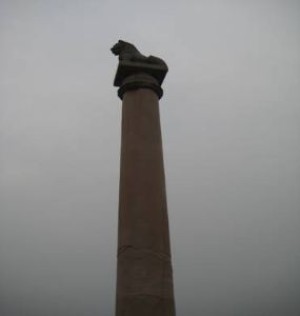
Trụ đá vua A Dục Ảnh: Tâm Bửu
Trong triều đại của vua A Dục (Asoka), vào năm thứ 20, Ông cũng thân hành đến nơi đây để chiêm bái và dựng thạch trụ, một trong nhiều thạch trụ ở Ấn Độ, để đánh dấu sự kiện trọng đại của Phật giáo tại thành Tỳ Xá Ly này. Hiện nay, hầu hết các trụ đá của vua A Dục được dựng lên trong tất cả các thánh tích, điều bị tàn phá, gãy đổ, do các đế chế đối nghịch Phật giáo và quân Hồi giáo bạo tàn.
Tìm kiếm nhanh
ID:112 Trụ đá vua A Dục (Asoka)
ID:112
Class:4
Section:A
General Information
Tên gọi |
: | Trụ đá vua A Dục (Asoka) |
|---|---|---|
| Academic Year | : | 2020 |
| Gender | : | Không xác định |
| Religion | : | Group |
| blood | : | B+ |
Other Information
Trụ đá vua A Dục Ảnh: Tâm Bửu Trong triều đại của vua A Dục (Asoka), vào năm thứ 20, Ông cũng thân hành đến nơi đây để chiêm bái và dựng thạch trụ, một trong nhiều thạch trụ ở Ấn Độ, để đánh dấu sự kiện trọng đại của Phật giáo tại thành Tỳ Xá Ly này. Hiện nay, hầu hết các trụ đá của vua A Dục được dựng lên trong tất cả các thánh tích, điều bị tàn phá, gãy đổ, do các đế chế đối nghịch Phật giáo và quân Hồi giáo bạo tàn.
Trụ đá vua A Dục (Asoka)
Trụ đá vua A Dục (Asoka)
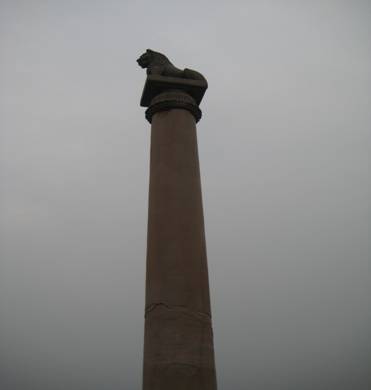 Trụ đá vua A Dục Ảnh: Tâm Bửu
Trong triều đại của vua A Dục (Asoka), vào năm thứ 20, Ông cũng thân hành đến nơi đây để chiêm bái và dựng thạch trụ, một trong nhiều thạch trụ ở Ấn Độ, để đánh dấu sự kiện trọng đại của Phật giáo tại thành Tỳ Xá Ly này. Hiện nay, hầu hết các trụ đá của vua A Dục được dựng lên trong tất cả các thánh tích, điều bị tàn phá, gãy đổ, do các đế chế đối nghịch Phật giáo và quân Hồi giáo bạo tàn. Chỉ duy nhất nơi đây thạch trụ sư tử một đầu vẫn còn nguyên vẹn và đứng vững vàng, hiên ngang giữa khu phế tích Phật giáo. Thạch trụ là một khối đá nguyên được đẽo gọt tròn láng, cao khoảng 11m và đường kính khoảng 1m. Trên thân trụ có nhiều hoa văn và những bia ký được khắc bằng kiểu chữ Brahmi, ở đỉnh có hình sư tử một đầu hướng về phương Bắc. Nhờ những chữ khắc trên thân trụ mà người ta được biết chính nơi đây đức Thế Tôn đã để lại những di ngôn cuối cùng trước khi giã từ dân chúng Tỳ Xá Ly đi về Câu Thi Na nhập Vô Dư Niết Bàn. Phía trước thạch trụ là nền gạch cũ chu vi khoảng 15 m vuông, cao khoảng 3m, đó là ngôi tháp do vua A Dục xây dựng để thờ Xá Lợi Ngài A Nan, người có công đầu trong việc xin cho nữ giới thành lập ni đoàn Phật giáo. Vào năm 1976, các nhà khảo cổ đã khai quật và tìm thấy một hộp bằng đá đựng xá lợi, vài lá vàng ròng và những viên đá quý rất nhỏ. Xung quanh ngôi tháp này cũng có nhiều bờ tường cũ mục, cũng có thể là di tích của những tu viện cũ hay những ngôi tháp nhỏ được xây dựng xung quanh đại tháp này. Phía sau thạch trụ khoảng 10m, có một cái hồ nước hình chữ nhật có tên là Ramakunda, nghĩa là Hồ Khỉ, nhằm lấy tên của một con khỉ chúa thường xuyên thỉnh bát của Phật, leo lên các cành cây hái trái và lấy mật để cúng dường đức Phật khi Ngài dừng chân tại khu Đại Lâm này.
.TRỤ AŚOKA
Nhóm di tích trụ đá của vua Aśoka – không phải một địa danh duy nhất
ĐÍNH CHÍNH QUAN TRỌNG
Record hiện tại:
Trụ đá vua A Dục (Asoka)
không nên tồn tại như:
một PLACE duy nhất có một GPS.
“Trụ Aśoka” là:
một nhóm monument / archaeological object
phân bố tại:
nhiều địa điểm khác nhau.
Mỗi trụ phải có:
-
parent place riêng;
-
coordinates riêng;
-
inscription riêng;
-
monument history riêng;
-
archaeological status riêng;
-
degree of certainty riêng.
Do đó record này nên chuyển thành:
MONUMENT GROUP / COLLECTION / HERITAGE TYPE
hoặc:
INDEX RECORD
liên kết đến từng trụ riêng.
1. TÊN CHUẨN
Pāli/Prakrit royal title thường gặp trong edicts:
Devanampiya Piyadasi
Sanskritized:
Devānāṃpriya Priyadarśin.
Historical king:
Aśoka
Vietnamese:
A Dục
English:
Ashoka / Aśoka
2. KHÔNG DÙNG “ASOKA” LÀ TÊN ĐỊA DANH
Aśoka:
PERSON.
Ashokan Pillar:
MONUMENT TYPE / INDIVIDUAL MONUMENT.
Therefore:
canonical_place_name = null
for the generic record.
3. PLACE TYPE
Không ghi:
place_type = địa danh
Better:
entity_type = monument_group
monument_type = monolithic stone pillar
historical_period = Mauryan
patron = Aśoka
date = 3rd century BCE.
4. HISTORICAL PERIOD
Aśoka:
Mauryan emperor.
Reign conventionally:
c. 268–232 BCE
with chronology varying slightly among scholarly reconstructions.
Pillars:
mainly 3rd century BCE.
5. WHAT ARE THE AŚOKAN PILLARS?
They are:
monumental stone columns associated with Aśoka's imperial program.
Many bear:
inscriptions.
Some:
do not.
Some preserve:
capitals.
Some:
shafts only.
Some:
fragments.
Some were:
moved in later periods.
Therefore never assume:
every Aśokan pillar is intact and in original location.
6. MATERIAL
Many major pillars were made from:
fine sandstone.
Chunar sandstone is strongly associated with:
Mauryan pillar production.
But:
verify individual monument before assigning quarry/material.
7. MONOLITHIC SHAFTS
A characteristic feature:
large monolithic shafts.
Many exhibit:
highly finished Mauryan polish.
8. CAPITALS
Capitals can include animals such as:
-
lion;
-
bull;
-
elephant;
-
horse-related motifs in broader Mauryan artistic contexts.
But:
not every pillar has surviving animal capital.
9. SĀRNĀTH LION CAPITAL
The most famous:
Lion Capital from Sārnāth.
It originally crowned:
an Aśokan pillar.
Today:
preserved separately in Sarnath Museum.
Its four-lion composition became:
the State Emblem of India.
The Dharma wheel motif:
also became central to modern Indian national symbolism.
10. DO NOT PUT SĀRNĀTH CAPITAL ON EVERY PILLAR
The four-lion capital:
belongs specifically to Sārnāth.
Do not generate:
four lions on the Lumbinī pillar.
Do not generate:
four lions on the Vesālī/Kolhua pillar.
11. KOLHUA CAPITAL
At Kolhua near ancient Vesālī:
the surviving pillar has a single lion capital.
This is a different monument.
The official Vaishali district description records a polished monolithic sandstone pillar about 18.3 m high with a life-size lion above it.
12. LUMBINĪ PILLAR
Lumbinī:
another completely separate pillar.
Its importance lies especially in:
its inscription.
Do not give it:
Sārnāth's lion capital.
INSCRIPTIONS
13. AŚOKAN INSCRIPTIONS
Aśoka's inscriptions constitute:
one of the most important bodies of primary historical evidence for ancient South Asia.
They provide direct evidence concerning:
-
royal policy;
-
dhamma;
-
administration;
-
ethical ideals;
-
religious communities;
-
pilgrimage;
-
particular sacred places.
14. NOT ALL INSCRIPTIONS ARE “BUDDHIST SERMONS”
Aśokan inscriptions vary enormously.
Do not summarize all as:
“Buddha's teachings carved on pillars.”
Many concern:
Aśoka's dhamma policy and governance.
Some have:
specifically Buddhist institutional content.
Others:
site-specific commemoration.
15. LANGUAGE
Many Aśokan inscriptions are:
Middle Indo-Aryan / Prakrit
written in:
Brāhmī.
Other regions use:
Kharoṣṭhī.
There are also:
Greek and Aramaic Aśokan inscriptions.
Therefore:
“all Aśoka inscriptions are Pāli”
is incorrect.
16. IMPORTANT CORRECTION FOR LUMBINĪ
The Lumbinī inscription is often loosely described in pilgrimage literature as:
Pāli.
For rigorous database classification:
use Prakrit / Middle Indo-Aryan written in Brāhmī,
unless following a particular cataloguing convention.
Do not make:
“Pāli” a universal inscription-language field.
17. DEvanampiya PIYADASI
A common royal designation:
Devanampiya Piyadasi
roughly:
Beloved of the Gods, Piyadasi/Priyadarśin.
This occurs widely in:
Aśokan inscriptions.
18. “AŚOKA” IDENTIFICATION
The connection between:
Devanampiya Piyadasi
and:
Aśoka
is established through the wider epigraphic/historical corpus.
Database should preserve:
inscription_royal_name
separately from:
historical_person.
LUMBINĪ
19. MOST IMPORTANT SITE-SPECIFIC PILLAR FOR BUDDHA'S BIRTHPLACE
Hierarchy:
NEPAL
↓
LUMBINĪ
↓
AŚOKA PILLAR.
This is:
a real monument at the site.
20. DATE
UNESCO describes the pillar as erected:
249 BCE.
This belongs to:
Aśoka's pilgrimage/commemorative activity.
21. INSCRIPTION
The inscription records that:
King Piyadasi/Aśoka personally visited and worshipped/honoured the place because Buddha Sakyamuni was born there.
This is extraordinarily important.
22. EPIGRAPHIC ANCHOR
Therefore:
ancient Lumbinī ↔ modern Lumbini
has:
exceptionally strong epigraphic support.
This is stronger than:
merely matching a traditional place-name.
23. LUMBINĪ VILLAGE
The inscription also refers to:
Lumbinī village.
It records:
a fiscal concession/reduction.
This confirms:
Lumbinī as a living locality in Aśoka's time.
24. DO NOT INVENT A FULL TRANSLATION
For database summary:
paraphrase.
If displaying a translation:
cite an epigraphic edition.
Do not generate:
pseudo-Brāhmī text.
25. DO NOT INVENT BRĀHMĪ
AI-generated inscriptions:
must never be used as evidence.
If image generation cannot reproduce inscription accurately:
show a schematic area
and label:
MINH HỌA.
26. LUMBINĪ CAPITAL
Do not assume:
current pillar retains its original capital.
Do not place:
Sārnāth lions on top.
27. LUMBINĪ PILLAR AS REAL PHOTOGRAPH
If using actual image:
real modern photograph can be labeled “Ảnh hiện trạng”.
If generated:
never label “ảnh thực tế”.
NIGĀLĪ SĀGAR
28. NIGĀLĪ SĀGAR PILLAR
Another crucial Aśokan pillar in Nepal Terai:
Nigālī Sāgar / Nigali Sagar.
Associated in its inscription with:
Buddha Konākamana / Kanakamuni.
29. KONĀKAMANA BUDDHA
The inscription refers to:
the stūpa of Buddha Konākamana.
Aśoka is recorded as:
enlarging it
and later:
visiting/worshipping.
This is important evidence for:
pre-Gotama Buddha cult/tradition in Mauryan-period Buddhism.
30. DO NOT MERGE WITH LUMBINĪ
Nigālī Sāgar:
separate monument.
Lumbinī:
separate monument.
Different inscriptions.
Different sacred associations.
VESĀLĪ / KOLHUA
31. PILLAR AT KOLHUA
Hierarchy:
VAJJI LANDSCAPE
↓
VESĀLĪ
↓
KOLHUA ARCHAEOLOGICAL AREA
↓
AŚOKAN LION PILLAR.
Modern:
Bihar, India.
32. REAL MONUMENT
The Kolhua pillar:
survives.
Official Vaishali sources describe:
-
monolithic polished sandstone;
-
approximately 18.3 m high;
-
bell-shaped capital;
-
single lion.
33. NO INSCRIPTION CLAIM
Important:
do not invent an Aśokan edict on the Kolhua shaft.
Its importance:
is primarily monument/archaeological attribution and Buddhist sacred landscape.
Not every pillar:
bears an edict.
34. “LAST SERMON” CLAIM
Modern official tourism sources connect the Kolhua pillar with:
Buddha's last sermon/final preaching at Vesālī.
This is:
modern heritage interpretation/tradition.
Do not automatically turn that into:
an inscription saying “Buddha gave his last sermon here.”
The pillar itself:
does not provide such an inscription.
35. BHIKKHUNĪ SAṄGHA
Similarly:
the Kolhua pillar is not an inscription commemorating the establishment of the Bhikkhunī Saṅgha.
Do not merge:
Aśoka pillar
with:
Kūṭāgārasālā event.
36. KŪṬĀGĀRASĀLĀ
Textual hierarchy:
Vesālī → Mahāvana → Kūṭāgārasālā.
Modern Kolhua pillar:
archaeological monument in the wider Vesālī landscape.
Do not say:
pillar = exact Kūṭāgārasālā marker.
SĀRNĀTH
37. SĀRNĀTH PILLAR
Hierarchy:
KĀSI REGION
↓
ISIPATANA / MIGADĀYA
↓
SĀRNĀTH ARCHAEOLOGICAL LANDSCAPE
↓
AŚOKAN PILLAR.
38. LION CAPITAL
The famous:
four-lion capital
belongs to:
Sārnāth.
This is:
one of the masterpieces of Mauryan stone sculpture.
39. CURRENT CONDITION
The capital:
is no longer sitting atop the pillar shaft.
It is preserved:
in Sarnath Museum.
The pillar shaft:
survives in broken form at the archaeological site.
40. DO NOT SHOW INTACT MODERN SĀRNĀTH PILLAR
A generated infographic must not show:
a complete tall standing pillar with four-lion capital at modern Sarnath
and label it:
current real condition.
That would be false.
41. SĀRNĀTH INSCRIPTIONS
The pillar bears:
inscriptions from different periods.
The Aśokan inscription includes:
a Saṅgha-related edict concerning schism/discipline.
Later inscriptions:
belong to later historical periods.
Do not merge all inscriptions into:
one Aśokan text.
42. FIRST SERMON
Sārnāth/Isipatana is traditionally and canonically associated with:
first turning of the Dhamma wheel.
But do not state:
the pillar inscription says “Buddha gave his first sermon here”
unless that exact inscription says so.
The site association and pillar inscription:
are different evidence streams.
SAÑCĪ
43. SĀÑCĪ
Sāñcī:
major Buddhist archaeological complex.
Aśokan activity:
strongly associated with the site's early development.
A pillar attributed to Aśoka:
survives in fragmentary condition.
44. NOT AN INTACT LION PILLAR
Do not portray:
a complete Sārnāth-style pillar
at Sāñcī.
Use actual archaeological state.
45. SAÑCĪ IS NOT A MAJOR BUDDHA-LIFE SITE
Unlike:
-
Lumbinī;
-
Bodh Gayā;
-
Isipatana;
-
Kusinārā,
Sāñcī:
is not primarily important because a canonical Buddha-life event occurred there.
Its importance:
Buddhist monument history and patronage.
LAURIYĀ NANDANGARH
46. LAURIYĀ NANDANGARH
This is:
a genuine Aśokan pillar site.
Modern:
Bihar.
The pillar:
survives standing.
It bears:
Major Pillar Edicts.
47. DO NOT CALL IT BUDDHA BIRTH/ENLIGHTENMENT SITE
Its importance:
Aśokan epigraphy.
Not:
a major Buddha-biography location.
48. LAURIYĀ ARARĀJ
Another separate Aśokan pillar:
Lauriya Araraj.
Also:
Bihar.
Also bears:
pillar edicts.
Do not merge with:
Lauriya Nandangarh.
RĀMPURVĀ
49. RĀMPURVĀ
Important Aśokan pillar site:
Rampurva.
Known for:
pillar capitals including the celebrated bull capital.
Again:
separate monument record.
50. DO NOT MIX CAPITALS
Sārnāth:
four lions.
Kolhua:
single lion.
Rampurva:
famous bull capital among its finds.
Each must remain:
separate.
ALLAHABAD / PRAYĀGRAJ PILLAR
51. PRAYĀGRAJ PILLAR
A major surviving pillar:
now at Prayagraj Fort.
It bears inscriptions from:
multiple historical periods.
Including:
Aśokan text
and later inscriptions.
52. MULTI-PERIOD MONUMENT
This pillar demonstrates:
pillars can have long reuse histories.
Do not assume:
every inscription visible on an Aśokan pillar was carved by Aśoka.
DELHI PILLARS
53. TOPRA PILLAR
One Aśokan pillar originally stood at:
Topra.
It was later transported to:
Delhi
under:
Fīrūz Shāh Tughlaq.
Thus:
current coordinates ≠ original coordinates.
Database must support:
original_location
and:
current_location.
54. MEERUT PILLAR
Likewise another pillar:
associated with Meerut
was moved to:
Delhi.
Again:
current site is not Mauryan original emplacement.
55. THIS IS WHY ONE GPS FIELD IS INADEQUATE
For monument records:
original_site_coordinates
and:
current_site_coordinates
may differ.
This is another reason:
generic “Ashoka Pillar GPS” is invalid.
BODH GAYĀ
56. CRITICAL CORRECTION
Bodh Gayā:
unquestionably has major Aśokan associations.
Aśoka:
is traditionally/historically associated with early monumental development at the enlightenment site.
But:
do not automatically list an intact “Aśoka pillar at Bodhgayā” equivalent to Lumbinī or Kolhua.
57. BODH GAYĀ'S AŚOKAN HERITAGE
More appropriate subjects include:
-
early shrine/temple phases;
-
Vajrāsana / Diamond Throne;
-
railings and Mauryan/post-Mauryan developments;
-
Aśokan pilgrimage tradition.
Do not manufacture:
a standing pillar merely because Aśoka visited/developed the site.
58. REMOVE BODHGAYĀ FROM “SURVIVING PILLAR” TABLE
Unless a specific pillar fragment and archaeological publication are being documented:
remove.
Bodh Gayā can remain:
related Aśokan Buddhist site.
Not:
confirmed equivalent pillar record.
KUSINĀRĀ
59. CRITICAL CORRECTION
Kusinārā:
is a canonical Buddha-life site.
But:
this does not automatically mean there is a surviving Aśokan pillar there.
The previous infographic's:
“Aśoka pillar foundation at Kusinārā”
must be removed unless a specific archaeological source is established.
60. XUANZANG'S REPORT
Chinese pilgrimage accounts may mention:
Aśokan monuments/pillars at Buddhist sacred sites.
These are:
historical textual reports.
They must be distinguished from:
surviving archaeological pillars.
Thus database may have:
reported_by_Xuanzang = yes
while:
surviving_pillar = no / uncertain.
61. DO NOT TURN PILGRIM REPORT INTO SURVIVING MONUMENT
If Xuanzang describes a pillar:
that is evidence for a seventh-century observation/tradition.
It does not mean:
an extant pillar can be photographed today.
RĀJAGAHA
62. CRITICAL CORRECTION
Rājagaha:
enormously important Buddhist landscape.
But the previous infographic's:
“Aśoka pillar at Rājagaha”
is too vague.
Do not add a generic:
Rājagaha pillar
without identifying:
-
archaeological object;
-
inscription;
-
excavation reference;
-
current location.
63. REMOVE GENERIC RĀJAGAHA ROW
Until a specific monument is verified:
remove it from confirmed pillar list.
FOUR GREAT PILGRIMAGE PLACES
64. ANOTHER IMPORTANT ERROR
Do not assume Aśoka erected surviving pillars at:
all four major pilgrimage sites.
The four sites are defined by:
Buddhist textual tradition.
Aśoka's monument program:
is a different evidence layer.
65. LUMBINĪ
Surviving Aśokan pillar:
YES.
Strong inscription:
YES.
66. BODH GAYĀ
Aśokan monumental/pilgrimage association:
VERY STRONG.
Equivalent surviving inscribed pillar:
DO NOT ASSUME.
67. SĀRNĀTH
Aśokan pillar:
YES.
Capital:
famous four lions.
68. KUSINĀRĀ
Aśokan/pilgrimage tradition:
relevant.
Surviving pillar equivalent:
DO NOT ASSERT WITHOUT SPECIFIC EVIDENCE.
69. THE MAP MUST CHANGE
The previous infographic map:
mixes confirmed surviving pillars, proposed monuments, Buddhist sites and general Aśokan associations.
This creates false equivalence.
Future map needs separate symbols.
70. MAP SYMBOL A
● EXTANT / ARCHAEOLOGICALLY IDENTIFIED AŚOKAN PILLAR
Examples:
-
Lumbinī;
-
Kolhua/Vesālī;
-
Sārnāth;
-
Lauriya Nandangarh;
-
Lauriya Araraj;
-
Rampurva;
-
Sāñcī fragment;
-
Prayagraj;
-
Topra/Delhi;
-
Meerut/Delhi.
71. MAP SYMBOL B
◐ MOVED PILLAR
Examples:
-
Topra → Delhi;
-
Meerut → Delhi.
72. MAP SYMBOL C
△ AŚOKAN BUDDHIST SITE WITHOUT EQUIVALENT CONFIRMED EXTANT PILLAR
Example:
Bodh Gayā.
73. MAP SYMBOL D
? TEXTUALLY REPORTED / UNCERTAIN PILLAR
Use for:
ancient reports where archaeological survival/identification is uncertain.
74. NO RED “BUDDHIST CIRCUIT” LINE
Aśokan pillars:
are not stations on one canonical route.
Do not connect:
Lumbinī → Bodhgayā → Sārnāth → Kusinārā
with a red line and imply:
Aśoka's verified itinerary.
75. AŚOKA'S PILGRIMAGE
Some inscriptions establish:
visits to particular sites.
Other site associations come from:
Buddhist literary tradition.
Do not reconstruct:
a complete GPS itinerary
without evidence.
BUDDHIST SIGNIFICANCE
76. AŚOKA AND BUDDHISM
Aśoka's inscriptions demonstrate:
strong engagement with Buddhist institutions and sacred geography.
But his broader dhamma program:
cannot simply be equated with Buddhism in every inscription.
77. DHAMMA
Aśoka's:
dhamma
includes ethical and administrative concerns extending beyond:
sectarian Buddhist doctrine.
Avoid translating every occurrence as:
“Buddhist Dhamma.”
78. BUDDHIST-SPECIFIC EDICTS
Some inscriptions are:
explicitly related to Buddhism/Saṅgha.
Examples include:
Saṅgha-related pillar inscriptions.
These can be tagged:
buddhist_specific = yes.
79. SITE-SPECIFIC INSCRIPTIONS
Lumbinī:
Buddha birthplace.
Nigālī Sāgar:
Konākamana Buddha/stūpa.
These are:
especially valuable for Buddhist historical geography.
80. ARCHAEOLOGICAL VALUE
Pillars help with:
-
site identification;
-
Mauryan chronology;
-
imperial geography;
-
Buddhist pilgrimage history;
-
art history;
-
epigraphy;
-
language/script history.
81. BUT PILLAR ≠ PROOF OF EVERY LOCAL TRADITION
A pillar at a Buddhist site does not prove:
every later legend associated with that site.
Read:
actual inscription.
82. INSCRIPTION-FIRST RULE
For database:
inscription text > later monument label.
Always ask:
What does this particular inscription actually say?
83. NO GENERIC “AŚOKA CONFIRMED THIS”
Each claim needs:
pillar-specific evidence.
84. SCRIPT
Brāhmī:
important for many pillar inscriptions.
But do not generate:
decorative pseudo-Brāhmī.
Use:
verified transcription
only when source available.
85. TRANSLITERATION
Store separately:
original_script
roman_transliteration
translation_vi
translation_en
edition_source.
This prevents:
fake quotation.
86. MULTIPLE INSCRIPTIONS
A pillar can carry:
inscriptions from multiple periods.
Database therefore needs:
one-to-many inscription relation.
Not:
one pillar = one inscription.
87. CAPITAL AS SEPARATE OBJECT
In museum cases:
capital and shaft may now be separated.
Database could model:
pillar_shaft
capital
as:
related archaeological objects.
Sārnāth is the clearest example.
88. ORIGINAL VS CURRENT LOCATION
Mandatory fields:
original_location
current_location
moved = yes/no.
Especially important for:
Delhi pillars.
89. CONDITION
Suggested:
condition = intact / broken / fragmentary / moved / capital-separated.
90. INSCRIPTION STATUS
Suggested:
inscription_status = inscribed / uninscribed / multiple-period inscriptions / uncertain.
DATABASE STRUCTURE ĐỀ NGHỊ
GENERIC INDEX RECORD
canonical_name = null
display_name = Trụ Aśoka – hệ thống trụ đá và minh văn thời Maurya
entity_type = monument_group
patron = Aśoka
dynasty = Maurya
period = 3rd century BCE
monument_type = monolithic stone pillar
generic_GPS = null
single_parent_place = null
multiple_sites = yes
CHILD RECORD EXAMPLES
LUMBINĪ
monument_name = Aśoka Pillar at Lumbinī
parent_place = Lumbinī
country = Nepal
surviving = yes
inscribed = yes
inscription_script = Brāhmī
inscription_language = Middle Indo-Aryan / Prakrit
Buddha_birthplace_reference = yes
Asoka_visit_reference = yes
modern_identification_confidence = very high
NIGĀLĪ SĀGAR
monument_name = Nigālī Sāgar Aśoka Pillar
country = Nepal
surviving = yes
inscribed = yes
Konakamana_Buddha_reference = yes
stupa_enlargement_reference = yes
KOLHUA / VESĀLĪ
monument_name = Aśokan Lion Pillar at Kolhua
parent_landscape = Vesālī
country = India
surviving = yes
capital = single lion
inscribed_Ashokan_edict = no / not established
exact_Kutagarasala_marker = no
SĀRNĀTH
monument_name = Aśokan Pillar at Sārnāth
parent_place = Isipatana / Sārnāth
country = India
shaft_condition = broken
capital = four-lion capital
capital_current_location = Sarnath Museum
inscribed = yes
Sangha_schism_related_inscription = yes
LAURIYA NANDANGARH
monument_name = Aśokan Pillar at Lauriya Nandangarh
country = India
surviving = yes
standing = yes
major_pillar_edicts = yes
LAURIYA ARARAJ
monument_name = Aśokan Pillar at Lauriya Araraj
country = India
surviving = yes
major_pillar_edicts = yes
RAMPURVA
monument_name = Aśokan Pillars at Rampurva
country = India
capital_association = bull / lion
multiple_pillar_elements = yes
PRAYAGRAJ
monument_name = Prayagraj Pillar
country = India
Ashokan_inscriptions = yes
later_inscriptions = yes
multi_period = yes
TOPRA → DELHI
original_place = Topra
current_place = Delhi
moved = yes
moved_period = Sultanate
Ashokan_edicts = yes
TÊN RECORD ĐỀ NGHỊ
Nếu giữ record tổng:
Trụ Aśoka – hệ thống trụ đá và minh văn thời Maurya
Không nên:
“Trụ đá vua A Dục (Asoka)”
như thể chỉ có:
một monument.
Nếu record hiện tại vốn định nói một trụ cụ thể:
phải xác định trụ nào trước khi giữ nó như PLACE/MONUMENT.
MÔ TẢ NGẮN ĐỀ NGHỊ
Các trụ Aśoka là một hệ thống monument đá thời Maurya thế kỷ III TCN gắn với hoàng đế Aśoka (Devanampiya Piyadasi), phân bố tại nhiều địa điểm ở Nam Á chứ không phải một địa danh duy nhất. Nhiều trụ mang minh văn bằng các dạng Middle Indo-Aryan/Prakrit, chủ yếu viết bằng Brāhmī ở phần lớn tiểu lục địa, cung cấp nguồn sử liệu trực tiếp đặc biệt quan trọng về chính sách dhamma, quản trị, Saṅgha và địa lý hành hương thời Maurya. Đối với địa danh Phật học, trụ Lumbinī đặc biệt quan trọng vì minh văn ghi nhận chuyến viếng thăm của Aśoka và xác nhận địa điểm được tôn kính là nơi Buddha Sakyamuni đản sinh; trụ Nigālī Sāgar liên hệ với stūpa của Buddha Konākamana; tại Sārnāth tồn tại phần trụ Aśoka cùng Lion Capital nổi tiếng, còn Kolhua trong cảnh quan Vesālī bảo tồn một trụ nguyên khối với đầu sư tử đơn. Những địa điểm như Bodh Gayā có quan hệ Aśokan rất mạnh nhưng không nên vì thế tự động được liệt kê như có một trụ Aśoka còn nguyên tương đương Lumbinī hay Kolhua; tương tự, các báo cáo văn học về trụ tại một thánh tích phải được phân biệt với monument khảo cổ hiện còn. Vì vậy database nên dùng record này như một index/monument group và tạo child record riêng cho từng pillar, với parent place, inscription, tình trạng, vị trí gốc, vị trí hiện tại và GPS riêng.
DỮ LIỆU ĐỀ NGHỊ
EPIGRAPHY
RẤT CAO
Aśokan inscriptions:
primary historical evidence.
LUMBINĪ PILLAR
RẤT CAO
Extant monument:
yes.
Inscription:
yes.
Buddha birthplace reference:
yes.
Aśoka visit:
yes.
NIGĀLĪ SĀGAR
RẤT CAO
Extant/identified pillar:
yes.
Konākamana Buddha association:
epigraphic.
SĀRNĀTH
RẤT CAO
Aśokan pillar:
yes.
Four-lion capital:
yes.
Capital currently atop shaft:
no.
KOLHUA / VESĀLĪ
RẤT CAO
Aśokan lion pillar:
yes.
Single lion:
yes.
Aśokan edict on shaft:
do not claim without evidence.
Exact Bhikkhunī-foundation marker:
no.
BODH GAYĀ
Aśokan association:
VERY HIGH.
Equivalent extant pillar:
DO NOT ASSUME.
KUSINĀRĀ
Buddhist sacred site:
VERY HIGH.
Extant equivalent Aśokan pillar:
NOT ESTABLISHED HERE.
RĀJAGAHA
Aśokan/Buddhist historical context:
relevant.
Generic confirmed “Rājagaha Aśoka pillar”:
DO NOT CREATE WITHOUT SPECIFIC MONUMENT EVIDENCE.
MỨC ĐỘ CHẮC CHẮN
RẤT CAO
Aśoka commissioned/was associated with monumental stone pillars.
RẤT CAO
Many pillars bear Aśokan inscriptions.
RẤT CAO
Lumbinī pillar and inscription.
RẤT CAO
Sārnāth pillar and lion capital.
RẤT CAO
Kolhua/Vesālī lion pillar.
RẤT CAO
Lauriya Nandangarh pillar.
RẤT CAO
Lauriya Araraj pillar.
RẤT CAO
Rampurva pillar remains/capitals.
RẤT CAO
Prayagraj pillar's Aśokan inscription layer.
RẤT CAO
Topra pillar was moved to Delhi.
RẤT CAO
Different pillars have different inscription histories.
SAI MÔ HÌNH
One generic GPS for “Ashoka Pillar”.
KHÔNG NÊN KHẲNG ĐỊNH
Every major Buddha pilgrimage place had an equivalent surviving pillar.
NHỮNG ĐIỀU CẦN TRÁNH
-
Không coi “Trụ Aśoka” là một place.
-
Không gán một GPS chung.
-
Không gán một parent city chung.
-
Không gán một inscription chung.
-
Aśoka = person.
-
Pillar = monument.
-
Site = geographical entity.
-
Inscription = epigraphic object/text.
-
Phải tách bốn entity types này.
-
Không gọi mọi inscription Pāli.
-
Prefer Middle Indo-Aryan/Prakrit where appropriate.
-
Không nói mọi inscription dùng Brāhmī.
-
Northwest inscriptions may use Kharoṣṭhī.
-
Greek inscriptions exist.
-
Aramaic inscriptions exist.
-
Không gọi every edict Buddhist sermon.
-
Aśokan dhamma ≠ automatically Buddhist doctrine in every occurrence.
-
Không gọi every pillar Buddhist.
-
Không gọi every pillar pilgrimage marker.
-
Read actual inscription.
-
Không invent inscription.
-
Không invent Brāhmī letters.
-
Không generate pseudo-inscription as evidence.
-
Không fake translation.
-
Không quote without edition.
-
Không put quotation marks around paraphrase.
-
Không place four-lion capital on every pillar.
-
Four-lion capital = Sārnāth.
-
Kolhua = single lion.
-
Rampurva has its own capital history.
-
Lumbinī must not receive Sārnāth capital.
-
Không show intact modern Sārnāth pillar with capital attached.
-
Capital is in museum.
-
Shaft survives broken at site.
-
Không call Sārnāth capital current pillar-top.
-
Không call Indian national emblem original pillar itself.
-
National emblem is based on capital.
-
Không merge modern symbol and archaeological object.
-
Không say Lumbinī inscription is a general Major Pillar Edict.
-
It is site-specific/minor pillar inscription classification.
-
Không merge Lumbinī with Nigālī Sāgar.
-
Không merge Konākamana with Gotama.
-
Không say Nigālī Sāgar marks Gotama's birthplace.
-
Không say Lumbinī inscription concerns Konākamana.
-
Different pillars, different texts.
-
Không say Kolhua pillar inscription records Buddha's last sermon.
-
No such Aśokan inscription established there.
-
Heritage tradition ≠ inscription content.
-
Không say Kolhua pillar commemorates Bhikkhunī foundation epigraphically.
-
Không identify pillar as Kūṭāgārasālā marker.
-
Không identify pillar as exact Mahāvana GPS.
-
Keep archaeological landscape separate from textual micro-sites.
-
Không list Bodh Gayā as an intact surviving pillar without specific evidence.
-
Aśokan association ≠ pillar survival.
-
Không fabricate Bodhgayā pillar photograph.
-
Không fabricate Bodhgayā pillar coordinates.
-
Không fabricate Kusinārā pillar.
-
Không fabricate Kusinārā pillar foundation.
-
Không use random broken column as proof.
-
Textual pilgrim report ≠ extant monument.
-
Không fabricate Rājagaha pillar.
-
Verify monument before adding.
-
Không use general Buddhist importance as pillar evidence.
-
Không assume four pilgrimage sites = four surviving pillars.
-
These are different evidence systems.
-
Không connect pillars with canonical route.
-
Không draw Lumbinī→Bodhgayā→Sārnāth→Kusinārā as Aśoka's proven route.
-
No exact itinerary unless evidenced.
-
Không use precise borders unnecessarily.
-
Không use fake Mauryan empire boundary as pillar proof.
-
Map should classify monument status.
-
Distinguish surviving pillar.
-
Distinguish moved pillar.
-
Distinguish fragment.
-
Distinguish textually reported pillar.
-
Distinguish Aśokan site without confirmed pillar.
-
Không mix these categories.
-
Current GPS may differ from original GPS.
-
Topra is a key example.
-
Meerut is another.
-
Database needs original_location.
-
Database needs current_location.
-
Database needs moved flag.
-
Database needs condition.
-
Database needs capital status.
-
Database needs inscription status.
-
Database needs inscription language.
-
Database needs script.
-
Database needs edition/source.
-
Database needs dating.
-
Không infer exact date from “Aśokan”.
-
Some pillars have later inscriptions.
-
Không attribute later inscription to Aśoka.
-
Prayagraj is multi-period.
-
Sārnāth also has later inscriptional history.
-
Không label AI pillar image “ảnh thực tế”.
-
Real photograph must actually be a real source image.
-
AI reconstruction = MINH HỌA.
-
Generic record should function as an index, not a fake single monument.
-
Quan trọng nhất: “Trụ đá vua A Dục” phải được tách thành một nhóm monument và nhiều child records; chỉ khi xác định đúng từng trụ, minh văn, vị trí gốc, tình trạng và bằng chứng khảo cổ mới được gắn nó vào một địa danh Phật học cụ thể.
KẾT LUẬN DATABASE
Current record:
KHÔNG NÊN GIỮ LÀ MỘT PLACE ĐỘC LẬP
Convert to:
MONUMENT GROUP / INDEX
Recommended display:
Trụ Aśoka – hệ thống trụ đá và minh văn thời Maurya
Patron:
AŚOKA / DEVANAMPIYA PIYADASI
Period:
3RD CENTURY BCE
Dynasty:
MAURYA
Generic GPS:
NULL
Single parent place:
NULL
Child monuments:
YES
Priority Buddhist-geography child records:
LUMBINĪ PILLAR
NIGĀLĪ SĀGAR PILLAR
SĀRNĀTH PILLAR
KOLHUA / VESĀLĪ PILLAR
Other major epigraphic/archaeological children:
LAURIYA NANDANGARH
LAURIYA ARARAJ
RAMPURVA
PRAYAGRAJ
TOPRA → DELHI
MEERUT → DELHI
Bodh Gayā:
AŚOKAN SITE – DO NOT AUTOMATICALLY CREATE EXTANT PILLAR
Kusinārā:
DO NOT CREATE EXTANT PILLAR WITHOUT SPECIFIC EVIDENCE
Rājagaha:
DO NOT CREATE GENERIC PILLAR WITHOUT SPECIFIC EVIDENCE
Best database action:
CONVERT CURRENT RECORD TO INDEX + SPLIT INTO INDIVIDUAL MONUMENT RECORDS.
Servers Status
Server Load 1
Server Load 2
Server Load 3
Live Statistics
File Transfers
Tasks in Progress
Urgent Notifications
All Hands Meeting
Yet another one, at 15:00 PM
Build the production release
NEW
Something not important


